2026
CHI 2026 · ACM Conference on Human Factors in Computing Systems, Barcelona, Spain
PhD Candidate · Human-Computer Interaction
Improving personal health tracking and building AI-assisted technologies that make self-tracking more accurate, useful, and trustworthy.
Manning College of Information & Computer Sciences
University of Massachusetts Amherst
Advised by Dr. Ravi Karkar
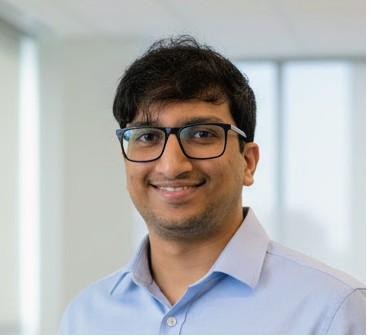
I am a third-year PhD candidate specializing in Human-Computer Interaction, with a focus on improving personal health tracking and designing AI-assisted health interventions.
My research explores how AI-assisted tools can help people better track and make sense of their own health data. A central focus of my work is improving the quality and reliability of self-reported health tracking, and developing technologies that make health tracking more accurate, useful, and trustworthy.
Before UMass, I earned my MSc in Computer Science from the University of Geneva, and spent a year at the Koita Centre for Digital Health at IIT Bombay working on intelligent OCR for medical records and synthetic medical imaging.
Attending the inaugural ACM Interactive Health Conference (IH’26) in Porto, Portugal, supported by a travel grant. Come say hello!
Giving a lightning talk at NYU Tandon School of Engineering, supported by an awarded travel grant.
Won Best PhD Poster for CASEbot at the 2026 Computational Social Science Student Poster Session at UMass Amherst.
First-author paper CASEbot accepted to CHI 2026 in Barcelona.
Systematic review of older adults’ unmet needs published in Innovation in Aging.
Paper on digital support for dementia caregivers published in JMIR Aging.
Paper comparing AI vs. human online support published in ACM Transactions on Computing for Healthcare.
Presented at the CHI 2024 Workshop on HCI and Aging in Honolulu, HI.
Started my PhD at UMass Amherst.
CHI 2026 · ACM Conference on Human Factors in Computing Systems, Barcelona, Spain
ACM Transactions on Computing for Healthcare, 2025
Innovation in Aging, Vol. 9, Suppl. 1, S14-S23, 2025
Exploring the Role of LLMs for Supporting Older Adults: Opportunities and Concerns
CHI 2024 Workshop on HCI and Aging: New Directions, New Principles, Honolulu, HI
A Needs-First Approach to Digital Technology for Aging in Place: Perspectives from Older Adults, Caregivers, and Professionals
Under review at Innovation in Aging
I’m recruiting developers for a research interview study on data quality in self-tracking. If you have designed or helped build a health-related app or platform that collects self-reported data (symptom logs, mood ratings, daily diaries, or EMA), I’d love to learn from your experience.
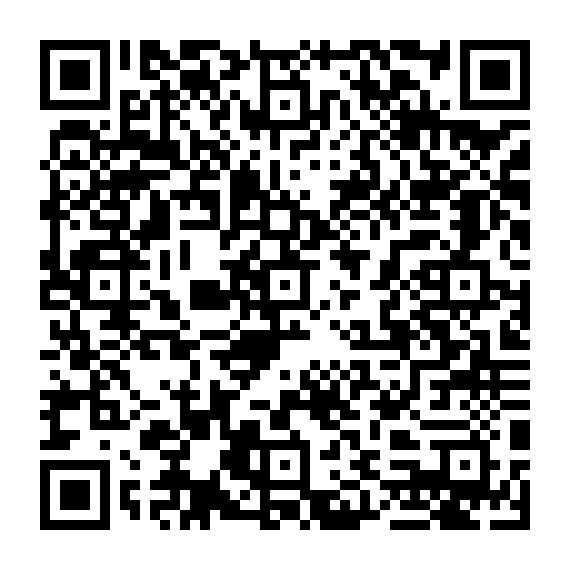 Scan to open the interest form
Developing a heuristic evaluation framework to help developers recognize and mitigate data quality issues (completeness, accuracy, validity, contextuality) earlier in the development cycle. Grounded in a synthesis of 85 papers and refined through semi-structured developer interviews.
An LLM-powered conversational agent (Rasa framework, Claude 3.7 Sonnet) that guides users through designing structured, personalized, and safe self-experiments across health domains. Our within-subjects mixed-methods study with 42 participants showed a 19.2% improvement in experiment quality through theory-driven prompt engineering.
Extracted key caregiver concerns and support needs from 100,000+ posts in Alzheimer’s online communities using topic modeling (LDA). Engineered ML classifiers (SVM, Random Forest, Neural Networks) achieving AUC scores of 0.83-0.87 for detecting emotional and informational support patterns.
Conducted a comprehensive literature review identifying unmet needs of older adults in home settings. Collaborated with an interdisciplinary team to synthesize findings into evidence-based design recommendations for aging-in-place technologies.
Implemented a joint-learning framework using LayoutLMv1 for OCR and key-value extraction from 15,000+ printed and handwritten medical documents at Narayana Hrudayalaya Hospitals. Achieved Acc: 0.983, F1: 0.945 on real-world healthcare forms, enabling digitization of patient records.
Developed GAN and Wasserstein Autoencoder (WAE) models for synthetic pneumonia X-ray generation. Implemented a guided subset selection methodology to boost data diversity, improving classification accuracy by up to 21.64% on label-scarce datasets.
Designed a comprehensive player profiling pipeline using physiological signals (ECG, EDA, Respiration) and in-game events from 100+ Counter-Strike participants. Applied dimensionality reduction and model-based clustering (LDA, logistic regression) to identify gameplay-driven emotional response patterns.
Teaching Assistant, UMass Amherst
Mentored students in course projects involving user research and interface design; held office hours and provided technical support for student teams.
Teaching Assistant, UMass Amherst
Assisted in course delivery covering self-tracking technologies, personal informatics systems, and health data analysis.
Full paper presentation of CASEbot
ACM Interactive Health Conference (IH’26), Porto, Portugal
Lightning Talk
NYU Tandon School of Engineering
Exploring the Role of LLMs for Supporting Older Adults
CHI 2024 Workshop on HCI and Aging, Honolulu, HI
Best PhD Poster
2026 Computational Social Science Student Poster Session, UMass Amherst, for CASEbot. Details
Travel Grants
ACM Interactive Health Conference (IH’26), Porto, Portugal (2026)
NYU Tandon School of Engineering lightning talk (2026)
Peer Reviewer
DIGITAL HEALTH (SAGE Publishing)
Interested in collaborating, or want to chat about HCI, health tracking, AI-assisted health tools, or technology for older adults? I’d love to hear from you.